Background
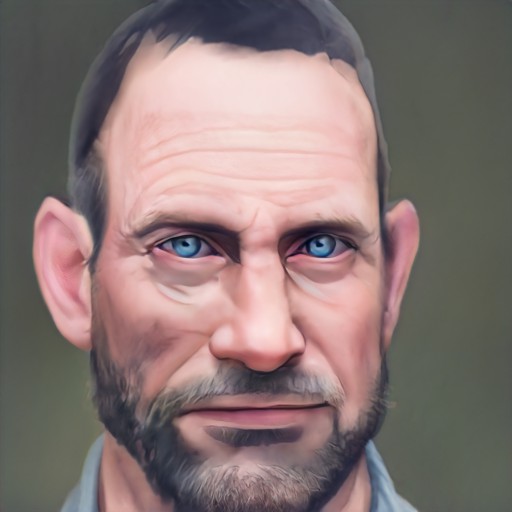
Casildo Imam was a geologist working in a ravine north of the Rinzeremel Mountains at the edge of the Muioqa Desert on the day of [history:42735991-17f4-4eb5-bf36-9bdceb67d1be]The Cataclysm[/history]. The ravine saved him from the initial blast, but the seismic shock opened up the ground beneath him creating a chasm nthat widened almost contantly for weeks with seismic activity. Such activity is recorded by a journal kept by Casildo as well as records kept by the Pewamro who were also caught in the chasm.
While these individuals were spared death in the initial blast, the radiation and fallout from the blast tainted water and began making changes to their DNA. These changes resulted in rapid mutations, particularly after a wound had healed. Over time, the mutations were such that survivors were misshapen, with skin ranging from flaky and dry to having a leathery or reptilian appearance.
Those who survived the blast also had to manage their resources very carefully, working through the [history:45c519ee-4769-4d42-84f4-8f02b544e38f]The 30-Year Winter[/history] and its cold on the surface and avoiding the roiling lava flow at the bottom of the chasm.
Casildo wrote this letter to his wife as a farewell. It is unlikely she survived the initial blast.
History
The letter was given to one of the Pewamro by Casildo before he died. He asked them to hold onto it until they saw someone from the surface. The promised him to do so, and the letter remained in their possession until nearly 700 years later. At that time, explorers from the surface came upon the chasm by accident. The Pewamro gave the explorers the letter, although by this time its history was lost to them.
The letter was returned to Orsholon City, and is now kept in the Royal Archives. Occasionally, it is brought out for the Festival of Tonoos, in remembrance of those who perished in The Cataclysm.
Contents
My dearest Areeqa,
I know you will never see this letter. And that, perhaps, is for the best. For I am no longer the man you married, the man you loved, the man you knew. I have seen things and done things to survive that I pray you will never endure, And I am changed.
I survived the blast in the desert, or so I thought. But the physical scars took much longer to appear than just in that instant. Most on the surface died instantly was blown off a ledge and into a ravine, a ravine that opened up into a chasm over the next few hours. I was stranded on that ledge until the winds subsided. And I thought I was saved, fortunate. But those who were truly saved were those who were vaporized in an instant, who disappeared forever in a quick flash of fire and light. I prayed you were not one of them. But now, after all I have seen, I pray you too were taken in that instant.
As the days passed, my love, I found I was changing. The heat and likely the radiation from the blast burned my skin slowly. Blisters began to form, then break over my entire body. The pain became excruciating. And the thirst, the endless thirst. I needed to drink, but by the third day after the blast, my canteen had run dry. I slowly made my way to the surface from the chasm. I was tired, thirsty. I dared not eat, as all I had were preserved rations that would only increase my thirst.
When I reached the top of the chasm, there was an eerie silence. The sky had darkened, and a thin fall of dust and water fell from the sky. It was like mud on my skin. I have to admit, it felt good on the increasingly burned skin. But it would take a great deal of it to filter out the water from the dirt. I set up a small makeshift water collector from the materials in my pack. And yet, the sky continued to darken.
My beloved Areeqa, by the 5th day I had collected enough water to have a drink. And it was becoming easier, as the clouds continued to thicken, and the temperature grew cooler. But yet, my skin still burned. My hands were becoming scarred, and what grew to replace the blistered skin was thick, almost leather-like. I was changing. As I write, I do so with the last ability of my hands to hold a pen. I fear in a few more days, they will no longer serve to hold anything.
As the weather cooled above, I took stock in what surrounded me. The land was nothing like it had been before the blast. It had been scoured cleart to bedrock by the fierce winds and the firestorm that accompanied the blast. Nothing but bare rock to the north, all the way to the mountains in the south. I collected as much water as my battered body could carry, and went back into the chasm to see what might help me survive.
That's when I found the others. I don't know where they came from. How long had I been on the surface? Once I was able to collect water, I started eating again. I stretched my rations. But I lost track of time. I had found shelter under rocks and slept. I had no fear of other creatures. But it had been getting harder to tell day from night. The sky grew darker, seemingly by the hour. I had not seen the suns in days. I feared I never would again.
But where had these people come from? There appeared to be dozens far down in the chasm. And many had suffered far more than I. Some were burned beyond recognition, and yet lived, like they had been flayed alive by some evil demon. They moved along the ledges in the chasm, dazed, in pain. Others were bent and misshapen, tortured by their injuries. There were small children. Oh Areeqa, the suffering! And yet, there was no food, no medicine for any of them. By what I believe to be the end of the first week, rain had become a regular, almost non-stop occurrence on the surface. It rans down the walls of the chasm, proving a source of water. But the seismic activity had not stopped. Occasionally, a sudden, violent tremor would shake the ground, and the chasm would grow wider. It was during one of these tremors that I suddenly saw the very bottom of the chasm open up, with a river of molten rock far below. As I, and many of the others, looked down in amazement, another tremor hit, and we watched helplessly as a young man slipped and fell to the red river below. We heard his screams as his body was engulfed in molten rock, then suddenly stopped. I will never forget that sight.
Surviving has been difficult. We have had to make do for food, sometimes in abhorrent ways, simply to survive. Oh that I would have perished on the day of the blast!
The suns have not been seen since the blast. The sky has darkened to night, yet we do not see the stars. It is cold on the surface, and snow has begun to fall. In the chasm, it is warmer, and the snow does not reach the dpeths. I do not know what we will do for food. Some of the others believe there may be a fungus we can eat growing in some of the cracks and crevices about halfway down the chasm.
My love, I do not expect you will ever see this. I hope beyond hope that I will see your face either here or in the afterlife. I miss you with a most painful yearning. I do not know how long I will live. The mutations have left me hideous and frightful. I do not recognize myself.
I hope that you will forgive me those things I have done to survive. You are always in my thoughts and my heart. Goodbye, my angel.
[right]Your loving husband,
Casildo[/right]
Publicreaction
Most see the letter as a last outreach from a husband to his wife, a missive written to express his grief and fears, and his longing to be with her. Of course, there are the cynics who point out that if he had stayed home, he would not have ended up in the chasm, but this is usually discounted as unnecessary cynicism, as he would also have perished with her.