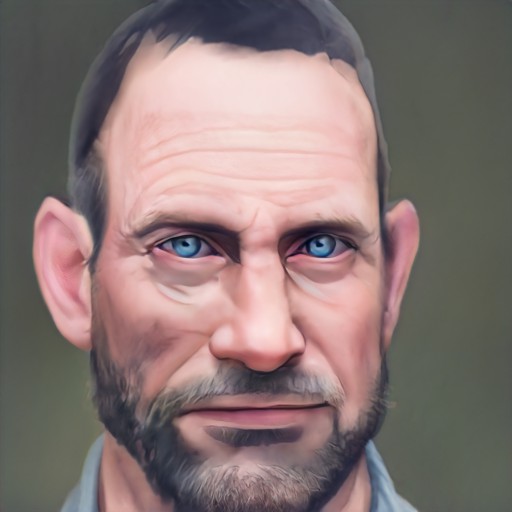
“High in the reaches of the Dragon’s Spine in Dangoang live an order of monks dedicated to the protection of dragons. I am not sure why they feel the dragons need the protection, but theior dedication to the faith is remarkable. I can’t imagine living for long at these altitudes.
History
The Zabuion Sunulawe were formed sometime after [history:42735991-17f4-4eb5-bf36-9bdceb67d1be]The Cataclysm[/history] although an exact time is unknown. Prior to The Cataclysm, Urnati were a smaller species, and not the massive creatures they have since become.
When the larger post-Cataclysm dragons began appearing in the skies, there was much fear. This was largley unfounded as, for the most part, the dragons had little interest in the different denizens of Dangoang or the world in general. The dragons, like virtually every other species on the planet, were simply trying to survive the aftermath of a horrific event.
But fear often drives violence. And in the late stages of [history:45c519ee-4769-4d42-84f4-8f02b544e38f]The 30-Year Winter[/history], marauding groups of thugs began trying to establish dominion over the Dragon’s Spine. Because the number of large dragons was still rare, these thugs had no fear of them. As the story goes, a small village had found a way to survive in the rift below a moutain pass in the Dragon’s Spine. Marauders decided that the pass would make an easy route to the crest of the Dragon’s Spine, and that no village was going to get in their way. The villagers would be no match for the marauders.
These thugs would take no prisoners. As they climbed higher and higher into the pass, they slaughtered those who got in their way. Nearing the most populated area of the village, they began lobbing flaming arrows into the roofs of the huts. Women and children cried and creamed as they ran from their homes, while the men tried desperately to save their village and defend against the marauders. All seemed lost.
Just as the marauders reached the center of the village, a shadow passed overhead. Landing just beyond the village, a great silver dragon stood with wings widespread, blocking the sun. The marauders had never seen a full-sized, post-Cataclysm dragon. It is believed this dragon was one of the Orshogoth dragons, an ancient line of dragons revered by many. The Orshogoth dragons were known to be aloof, but vested in that which they see as fair. The dragons had been keeping an eye on these mountain villages, recognizing that they represented encroaching individuals, but not acting unless they perceived a threat. The villagers did not pose such a threat, but these marauders were a different situation.
The dragon sttod still, blocking the sun for a few moments, watching the thugs freeze in their tracks. Then, the leader of the band of intruders began to charge up to the dragon. The dragon simply responded by bringing in its wings tight to its body, no longer blocking the sun. This blinded the group momentarily. The dragon took the opportunity to leap into flight, flanking the group. As they stood stunned by the sight of this magnificent creature circling them, the dragon let loose an icy, cold blast of breath. The sudden cold caused a number of the intruders to fall to their knees, others dropping their weapons.
The dragon dove into the group, talons bared and slashing. It landed, sweeping its tail and knocking the thugs that remained standing off their feet. Then, with a mighty sweep of its wings, the dragon blew them back down away from the village. Villagers simply stood in awe watching the encounter.
Before long, the dragon had killed or maimed most of the thugs, with the few survivors running away. The villagers began to praise the dragon. An animal about which they previously had intrepidations had come to their rescue. The village praised the dragon, and collectively vowed to do what they could to protect the pass. The dragon was surprised by this praise, as it simply acted as it saw was correct, and frankly, in defending its domain.
In thanks, the village began offering gifts to the dragon, to sty in its favor. These were unnecessary, as the dragon acted as it did for its own reasons. But it did accept the gifts. From that point forward, a relationship between dragonkind and the village was forged. It took very little time before this relationship turned into a more formal respect and reverence for the dragons. Some came to understand that the dragon acted not out of interest for the village, but out of what was right. The dragons had not been known to war just for the sake of warfare. They protected when prtection was needed. Otherwise, they were peaceful, graceful in the air. Thus was born the Zabuion Sunulawe.
Assets
Culture
Public Agenda
Structure
The Zabuion Sunulawe are a tight-knit group of monks whose monasteries are found high along the mountain range known as the Dragon’s Spine in northern Dangoang. Each monastery has its own individual structure but they are all tied together by a singular belief system. They revere dragons and believe that they represent the best – and worst – of all sentient creatures.
Each monastery has the goal of protecting the Dragon's Spine from intrusion. The Dragon’s SPine i s believed to be the sacred home of the majority of Arnathia’s dragon population. The monasteries are strategically placed in the paths most likely to be used by intruders, blocking access and providing a way for the monks to passively intercept potential intruders.
Each monastery is led by a high priest, a Peki Baqen. The high priest’s role is primarily to lead the monks below him in prayer, meditation, and protection of the monastery. The motivation for this is the belief that those who serve as protectors will one day be elevated and transform into a dragon themselves.
Below the high priest are the teachers, the Kumei. These individuals teach beliefs, prayers. meditations and fighting techniques to the acolytes of the monastery. The Kumei are highly respected and are often sought out for their wisdom. Many of the villages in the foothills of the Dragon’s Spine look to the monasteries to teach their young children about faith and obedience.
Lastly, there are the acolytes. From as early as age 6, acolytes come to the monastery to learn the ways of the Zabuion Sunulawe. Most will complete 3-4 years of training, then head back home. But approximately 1 in 100 will learn their lessons well enough to specialize, and will train another 5 years to become a teacher, a Kumei. These younger Kumei will act as aides to the more experienced Kumei, as only one Kumei is recognized as the master of any particluar specialty.
In the average monastery, you will find a Peki Baqen, from five to twenty Kumei, each with one to three aides, and as many as 200 students.